

How Tooth-Colored Fillings Improve Your Smile
January 13th, 2015

Today’s crowns, veneers, and tooth colored fillings are very natural looking compared to early counterparts. There was a time when dentists placed silver fillings exclusively. This material is still used, however the most common material used today in fillings is composite, tooth-colored fillings. Composite fillings can be made to match any shade of tooth and even let light travel through them like natural enamel.
Composite fillings are great in many different scenarios. The most obvious reason is when a cavity is present. This is an excellent way to seemingly erase the imperfection that once was. It is almost as if the cavity was never there.
Placing composite fillings to reshape teeth can also minimize excessive spacing. In the case of a diastema, (a large space between the two front teeth) composite material is a non-invasive and cost-effective choice that provides instant results. It can be an alternative to braces.
Mottled enamel is a symptom of fluorosis, which causes discoloration and imperfections in the enamel. Composites are the material of choice for masking this condition.
Composite fillings are easy to place, easy on the eyes, and easily repaired. With skill and good composite material, a filling can be easily disguised. This look is desired most in our society today, where dental perfection is now standard.
In conclusion, your smile is in good hands with composite fillings. There are some great materials that give a near perfect match to the appearance of natural tooth enamel. Smile with confidence knowing no one ever has to know. Your secret is safe with us at High Point Dental Group!
How Sedation Dentistry Can Help You Overcome Dental Anxiety
January 6th, 2015

Putting off your dental visit to High Point Dental Group because of fear or anxiety only increases the potential for tooth decay or gum problems. At our office, Dr. Angela Paros, Dr. Anthony Reganato and Dr. Matthew Hamedani and our team offer solutions that allow you to relax, without any pain, so you can keep your mouth healthy. Our solutions can help with many different anxiety issues for both adults and children.
Help with minor anxiety
Nitrous oxide is an excellent choice for most patients. Sometimes referred to as laughing gas, nitrous oxide can be regulated to provide you with the amount of sedation you need. When used before a local anesthetic, the injection will not be uncomfortable and you should not notice any pain during your procedure.
If you plan to use nitrous oxide, you can drive yourself to your appointment. In most cases, you will be fine to drive after your treatment: the sedation wears off quickly. Nitrous oxide can also be used along with other sedation techniques to produce a higher level of sedation.
Oral sedatives are available in a liquid or pill form. If you experience moderate anxiety levels, you can be given a tablet to take before your appointment. This type of sedation will be beneficial in relieving the anxiety that can build before your procedure. However, if you choose this method, you cannot drive yourself to your appointment.
Help with major dental anxiety
If you experience extreme levels of stress and anxiety about dental treatment, you may wish to discuss deep sedation or general anesthesia. With these techniques, you will be barely conscious or unconscious during your procedure. You will not feel discomfort or pain. Once you have experienced dentistry with a sedation technique, your anxiety level may decrease on its own.
People are not born with the fear of a dental exam. Unfortunately, most anxiety issues are due to a bad dental experience or childhood trauma. Sometimes anxiety comes from listening to the tales of others, who may have exaggerated their story. Talk to Dr. Angela Paros, Dr. Anthony Reganato and Dr. Matthew Hamedani and our team about your dental concerns or fears. Let us help you so you can get the dental care you need for a healthy mouth for life.
For more information about overcoming dental anxiety, or to schedule an appointment with Dr. Angela Paros, Dr. Anthony Reganato and Dr. Matthew Hamedani, please give us a call at our convenient Romeoville, IL office!
It's a Wrap: Ending the year with a smile!
December 30th, 2014

People have been ushering in the New Year for centuries but it became an official holiday in 1582 when Pope George XIII declared January 1st to be the day on which everyone would celebrate the New Year. At midnight people would yell, holler, and blow horns to scare away the evil spirits of the previous year so the New Year would be joyous and filled with opportunity. Nearly 500 years later, we still greet the New Year by whooping and hollering, but in a celebratory manner instead. Whether you intend to ring in the New Year quietly at home in the Romeoville, IL area or have plans to join the countdown at a gala extravaganza, these tips can help you ring out the old and usher in the new with a smile.
Tips for a Happy New Year's Eve Celebration from High Point Dental Group
- Be Safe. There's no way to predict the behavior of others on New Year's Eve, but you can be responsible for your own behavior to keep yourself safe. If adult beverages will be part of your celebration, plan on spending the night wherever you are or line up a designated driver to bring you home after the party is over.
- Enjoy Family and Friends. Spending time with the important people in your life is what makes the holidays enjoyable. Coordinate your schedules and choose New Year's Eve activities that everyone in the group will enjoy. You don't have to go to a party to ring in the New Year; some people like to go bowling, see a movie, or have a great meal at home.
- Accessorize with a Smile. Whether you dress up or have a quiet dinner with family and friends, one of the best accessories you can add to your attire is a beautiful smile.
New Year's Eve is a time to gather with friends and family, reflect on the year that's coming to an end, and look forward to the new one with anticipation. Enjoy this transitional holiday in a way that's safe, healthy, and fun. After all, counting down until the clock strikes 12 marks the beginning of a full year of opportunity ahead of you. From Dr. Angela Paros, Dr. Anthony Reganato and Dr. Matthew Hamedani, have a great new year!.
Telltale Signs that Your Tooth has a Cavity
December 23rd, 2014
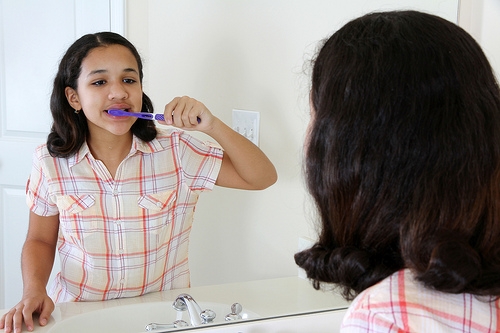
Dr. Angela Paros, Dr. Anthony Reganato and Dr. Matthew Hamedani and our team at High Point Dental Group frequently get questions about cavity causes and prevention. You brush twice a day and floss regularly. You rinse with mouthwash, just like the dentist recommended. In fact, you can’t remember the last time you had a cavity, but you think it was when you were a little kid. In all seriousness, you thought only kids got cavities.
The Signs and Symptoms of a Cavity
It’s believed that roughly 90% of North Americans will get at least one cavity in their lifetime. Those other ten percent, it seems, can eat as much pie, cake, and sugary cereals and sweets as they want. That’s not really true; just a stab at dental humor, and it was as bad as the pain your cavity is probably giving you.
When a cavity is in its initial stages, you will often be symptom-free and experience no discomfort at all. It’s not until the tooth decay has reached a certain level that you will begin to notice the signs and symptoms. While a toothache and sensitivity to hot and cold foods and liquids are surefire signs that you have a cavity, there are lesser-known symptoms as well. If you’re experiencing any of these warning signs, you may want to consider making an appointment with our office as soon as possible:
- Persistent bad breath or a bad taste in the mouth
- When you bite down, there is a sticky, tarry feeling
- Puss or discharge around a tooth
- A visible discoloring, usually black or brown
- Small pits or holes in the tooth
Routine dental care is important. While good oral hygiene, a healthy diet, and regular cleanings will deter the formation of cavities, they do not constitute a foolproof practice. A cavity can occur at any time, no matter what your age. Bacteria causes tooth decay, and no amount of brushing, flossing, and rinsing will eradicate all the bacteria from your mouth. If you think you may have a cavity, please contact our office immediately.
